Tag Archives: database

DynamoDB for NOSQL

How to Begin with DynamoDB for NOSQL Requirements

Today’s applications require scaled-out databases that are also highly available and can handle large amounts of structured and semi-structured data. Here is where Amazon DynamoDB excels, offering NoSQL technology that scales for high performance. Mastery of DynamoDB for NoSQL Needs is critical for companies developing cloud-first apps that must always be available even under uncertain

Continue reading »
Best conventional NoSQL Databases

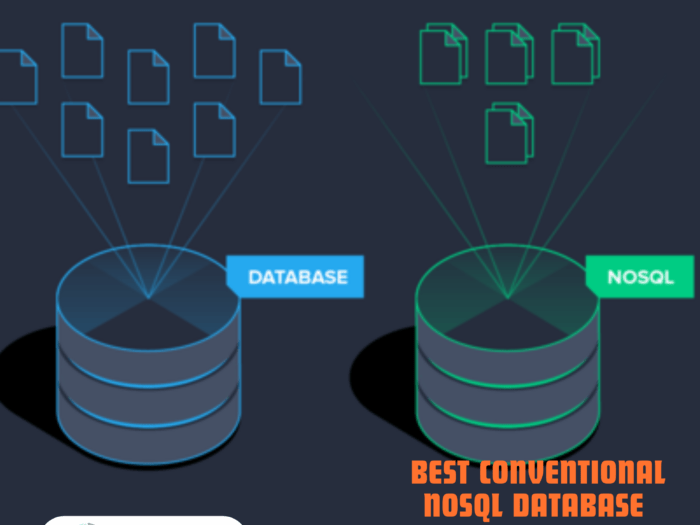
Choosing the Best Conventional NoSQL Database for You

Today, it has become more of a business choice than a technical one to select an appropriate database architecture. With an increasing amount of unstructured and semi-structured data, organizations now turn towards NoSQL solutions for scalability, flexibility, and high-performing solutions. Even while selecting the Best conventional NoSQL Databases, it has become an exercise to assess

Continue reading »
handling your data

Can DynamoDB, Redis, and MongoDB Handle Your Data?

Organizations are creating, processing, and retaining record-breaking amounts of data, so the question of managing your data is more relevant than ever. Whether it is a fintech application, an e-commerce app, or a predictive analytics tool, database technologies play a critical role in determining performance, scalability, and flexibility. Amazon DynamoDB, Redis, and MongoDB are popular

Continue reading »
Google BigTable

How to Leverage Google BigTable for Scalable Data Storage

What organizations require are storage solutions able to scale up easily without performance loss or loss in reliability. As datasets grow from gigabytes to terabytes and more, traditional databases fall behind. This is where Google BigTable will become crucial for those businesses that wish to store, process, and access data securely at a high performance

Continue reading »
Snowflake or Redshift

Snowflake vs. Redshift: Which One Is Right for You?

Choosing between Snowflake or Redshift has become a critical decision for organizations seeking efficient cloud data warehousing solutions. Each has massive scalability, high-performance analytics, and seamless integration with cloud ecosystems. However, Choosing between cloud data warehouse and Redshift requires examination of their data storage, compute capabilities, security, and pricing. The decision impacts how effectively you

Continue reading »
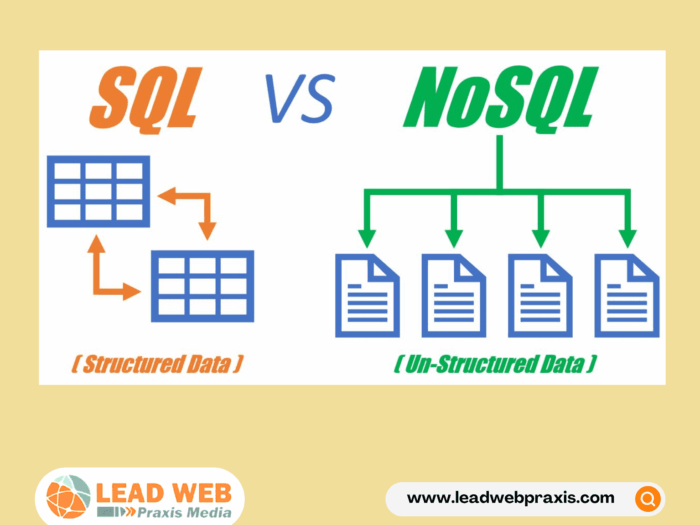
SQL and NoSQL

SQL vs NoSQL: When to Use Each?

The difference between SQL and NoSQL has become very important in the modern digital solution development of businesses. As data increases in size, speed, and complexity, selecting the appropriate architecture of a database will determine whether the application performs efficiently or succumbs to real-world demands. With AI, automation, and big-data systems expanding, how do companies

Continue reading »
choosing the right DBMS

How to Choose the Right Database Management System (DBMS)

Choosing the right DBMS or database management system, is one of the most strategic decisions any organization can make in today’s data-driven world. Often, business success depends on how effectively it collects, stores, and retrieves data to drive decision-making, automation of processes, and personalized experiences. Whether it’s operating an e-commerce platform, managing enterprise analytics, or

Continue reading »
CAP Theorem

Database: CAP Theorem: Balancing Consistency, Availability, and Partition Tolerance

The CAP theorem is one of the most fundamental and important concepts in database management and distributed systems that system architects and developers continue to adhere to today. Initially proposed by computer scientist Eric Brewer in the early 2000s, the CAP theorem explains the inherent trade-offs when creating distributed databases. It implies that a distributed

Continue reading »