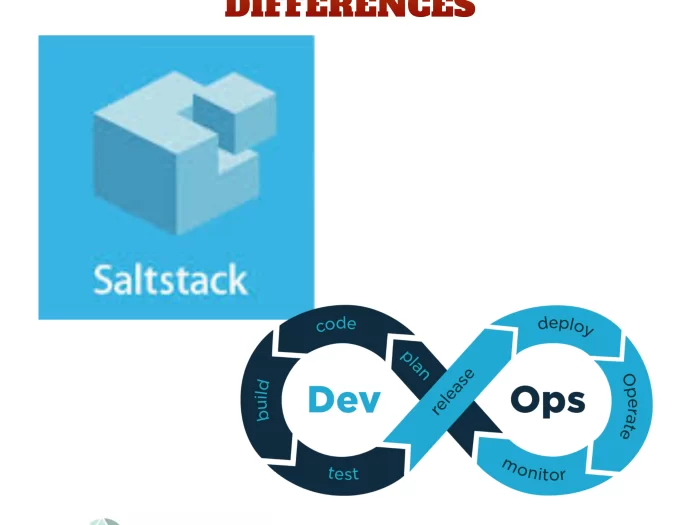
Organizations increasingly rely on DevOps for cloud solutions as the means to accelerate innovation, ensure scalability, and gain competitive advantage. While cloud computing has transformed the manner in which businesses deploy and manage applications, DevOps unlocks the true full potential of the cloud. DevOps connects software development and IT operations into a single workflow that helps a company get speed, collaboration, and reliability. Understanding and applying DevOps for cloud solutions is no longer an option but an imperative for Cloud Solutions Architects.
Bridging Development and Operations in the Cloud
One of the main reasons DevOps is so important for cloud solutions is that it bridges the wide gap between development teams and IT operations. Infrastructure is dynamic in cloud environments, resources scale on demand, and systems continuously integrate. DevOps empowers Cloud Solutions Architects to automate these complex interactions, reducing manual errors and improving consistency.
DevOps for cloud solutions does this through the establishment of CI/CD pipelines, which ensure that code updates are tested, validated, and seamlessly deployed. This ensures minimal downtime and quicker product releases. Architects can take advantage of orchestrating this flow using tools like Jenkins, GitLab CI/CD, or Azure DevOps to ensure that the development and deployment cycles align perfectly with the business goals.
Automation: The Foundation of Efficiency
Automation lies at the heart of DevOps for cloud solutions. Cloud Solutions Architects apply automation to eliminate repetitive manual tasks, speed up configurations, and enforce consistency across multiple environments. Infrastructure as Code tools like Terraform, AWS Cloud Formation, and Ansible let the architect define infrastructure declaratively; this means that servers, databases, and networks can be spun up in seconds with consistent results.
By embedding automation into deployment workflows, DevOps for cloud solutions improves reliability and repeatability. Besides that, it allows rapid recovery in case of failures due to the presence of automated rollbacks, system monitoring, and so on. Additionally, automation improves scalability, helping architects respond swiftly to changes in user demand without human intervention. As businesses start adopting AI-driven automation tools, the synergy between DevOps for cloud solutions and artificial intelligence becomes strong, allowing predictive maintenance, anomaly detection, and intelligent resource management.
Security and Compliance via DevSecOps
One of the major concerns for the Cloud Solutions Architect is security. Security integrated right from the beginning into the development lifecycle is referred to as DevSecOps, an integral part of DevOps for cloud solutions. Unlike traditional models that treated security as an afterthought, modern DevOps integrates it into every stage of the pipeline.
Automate vulnerability scanning, compliance checks, and threat modeling to ensure that your applications meet strict security standards before deployment. AWS Security Hub, Azure Defender, and GitHub Advanced Security are tools that natively integrate into your CI/CD pipelines, giving real-time visibility into risk. In regulated industries, DevOps for cloud solutions allows architects to easily stay compliant by automating audits and generating consistent security baselines across all environments.
This proactive security posture is especially relevant in an AI-driven world where cyber threats change faster than human monitoring can keep up. Will AI-driven DevOps soon be able to predict and neutralize security breaches before they even occur? That’s a pressing question Cloud Solutions Architects are beginning to explore.
Continuous Monitoring and Performance Optimization
Another important benefit of DevOps to cloud solutions is performance optimization. Continuous monitoring by tools like Prometheus, Datadog, and AWS CloudWatch provides architects real-time insights into application health, resource usage, and latency. Such insights drive quick responses to bottlenecks and failures, many times before the end-users are even aware of them.
DevOps for cloud solutions ensures resiliency and adaptiveness in the architecture of cloud solutions for Cloud Solutions Architects. Through observability and performance analytics, architects will be able to fine-tune configurations and balance workloads while predicting scaling needs. With the use of AI-enhanced monitoring, systems can automatically adjust performance thresholds, predict anomalies, and optimize cost efficiency for self-healing cloud infrastructures operating intelligently day and night.
Collaboration and Culture: The Human Side of DevOps
While the tools and automation form the backbone of DevOps for cloud solutions, culture is the soul that drives it. DevOps fosters a culture of shared responsibility, transparency, and collaboration. The Cloud Solutions Architect has a leading role in creating this atmosphere, so that development, security, and operations teams can work together toward common objectives.
DevOps for cloud solutions amplifies this agility through the institutionalization of feedback loops and cross-functional communication. Teams learn faster from failures, improve incrementally, and innovate confidently. In an AI-driven workspace where data and algorithms are rapidly rewriting job descriptions, such collaboration helps human professionals become more creative and adaptable-skills that no machine can replace.
Cost Optimization and Business Value
Adopting DevOps for cloud solutions directly reflects financial benefits. This is because Cloud Solutions Architects can automate resource provisioning and de-provisioning to match the demand coming in real time, so as to avoid waste. By leveraging cloud-native services with DevOps practices, organizations pay only for what they use to ensure maximum return on investment.
Because the deployment is faster and the downtimes fewer, it leads to quicker time-to-market and higher customer satisfaction. For a startup or enterprise, DevOps for cloud solutions enables digital transformation by aligning IT capability with strategic business goals. As AI-driven analytics become increasingly sophisticated, an organization will be able to use predictive modeling for cost estimates to automatically optimize budgets, further solidifying the financial advantages of a DevOps-enabled cloud strategy.
Innovation and Scalability with AI-driven DevOps
The integration of artificial intelligence and machine learning in DevOps on cloud solutions is the next frontier in technological advancement. AI brings automation to complex decision-making, from anomaly detection to recommendations for infrastructure improvements. AI-powered tools will help Cloud Solutions Architects predict system failures, optimize load balancing, and make their pipelines better with insights derived from historical data trends.
AI-enhanced DevOps for cloud solutions lead to intelligent, continuously learning and self-adaptable systems. For example, machine learning algorithms can analyze logs for early signs of performance degradation, even before users notice the problem, or propose the most optimal deployment strategy. The question now would be, Can AI fully manage DevOps pipelines in the future, eliminating human error while maintaining creativity and innovation?
Conclusion: Partner with Lead Web Praxis for DevOps Success
DevOps for cloud solutions is what a Cloud Solution Architect needs to design infrastructures that are resilient, scalable, and secure. It harmonizes automation, collaboration, and intelligence so that businesses can innovate faster and operate smarter in an increasingly digital and AI-driven world. The advantages are pretty clear and measurable: from enhanced security and continuous delivery to cost efficiency and predictive maintenance. In order to derive maximum value from DevOps for cloud solutions, expert guidance combined with hands-on implementation from reliable partners is required. Lead Web Praxis will help craft a DevOps and cloud strategy custom-fit for each organization to drive growth, performance, and innovation. Reach out to Lead Web Praxis today to make your cloud operations seamless, automated, and future-ready.