Choosing the right NoSQL database is a strategic decision that directly affects scalability, performance, cost, and long-term system flexibility. In today’s data-driven environment, organizations handling massive volumes of structured and semi-structured data often narrow their options to two proven technologies. The debate around BigTable or Cassandra is especially relevant for enterprises building large-scale, high-throughput applications that must remain resilient under heavy workloads. This article provides a balanced, human-centered analysis to help decision-makers understand where each platform excels and how to choose wisely.
Overview of Google BigTable
Google BigTable is a distributed, wide-column NoSQL database designed to manage petabyte-scale workloads with minimal latency. When evaluating BigTable or Cassandra, BigTable often appeals to organizations already invested in the Google Cloud ecosystem. It is fully managed, meaning infrastructure provisioning, replication, patching, and scaling are handled by Google. This allows engineering teams to focus on application logic rather than database operations, which can significantly reduce operational overhead in large environments.
Overview of Apache Cassandra
Apache Cassandra is an open-source, highly available NoSQL database originally developed at Facebook. In the discussion of BigTable or Cassandra, Cassandra is frequently chosen for its decentralized architecture and cloud-agnostic nature. It operates without a single point of failure and supports deployment across on-premises environments, private clouds, and multiple public cloud providers. This flexibility makes Cassandra attractive to organizations that prioritize control, portability, and independence from a single vendor.
Architecture and Data Model Comparison
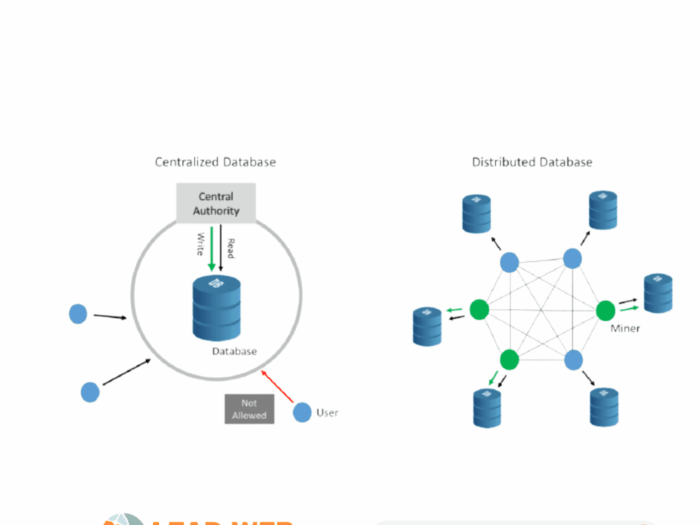
From an architectural standpoint, the distinction between BigTable or Cassandra becomes clear in how data is distributed and accessed. BigTable uses a master-based architecture with tablets that are automatically split and reassigned as data grows. Cassandra, by contrast, uses a peer-to-peer model where all nodes are equal. Both rely on wide-column data models inspired by Google’s original BigTable paper, but Cassandra’s design emphasizes continuous availability, while BigTable emphasizes simplicity and managed performance at scale.
Performance and Scalability
Performance is often a decisive factor when assessing BigTable or Cassandra. BigTable is optimized for extremely high read and write throughput with predictable performance, particularly for time-series data, analytics pipelines, and IoT workloads. Cassandra also scales linearly by adding nodes, but performance tuning is more hands-on and requires careful configuration. In environments with skilled database administrators, Cassandra can deliver exceptional performance; however, BigTable offers a more hands-off approach with consistent results.
Availability and Fault Tolerance
High availability is central to the BigTable or Cassandra debate. Cassandra is renowned for its fault tolerance, as data is automatically replicated across nodes and even across geographic regions without downtime. BigTable also offers strong replication and reliability, but it is tightly integrated into Google Cloud’s infrastructure. Organizations operating in multi-cloud or hybrid setups often favor Cassandra, while those comfortable with Google Cloud’s reliability guarantees may lean toward BigTable.
Cost and Operational Complexity
Cost considerations frequently influence the choice between BigTable or Cassandra. BigTable operates on a usage-based pricing model, which can be cost-effective for predictable workloads but expensive at very large scales. Cassandra, being open source, avoids licensing fees but introduces higher operational costs due to the need for skilled personnel and ongoing maintenance. The real trade-off is between managed convenience and operational control, which varies significantly depending on organizational maturity.
Ecosystem, Tooling, and AI Readiness
When evaluating BigTable or Cassandra in modern data stacks, ecosystem integration is critical. BigTable integrates seamlessly with Google Cloud services such as BigQuery, Dataflow, and AI platforms. Cassandra, on the other hand, benefits from a broad open-source ecosystem and strong community support. As AI-driven applications increasingly depend on real-time data pipelines, an important question emerges: how well does your database support machine learning workflows and intelligent automation without introducing bottlenecks?
Security and Compliance
Security requirements also shape the BigTable or Cassandra decision. BigTable benefits from Google Cloud’s built-in security features, including encryption at rest and in transit, identity management, and compliance certifications. Cassandra provides robust security as well, but implementation depends heavily on configuration and operational discipline. For regulated industries, the choice often depends on whether managed compliance or customizable security controls are more aligned with business needs.
Use Cases and Ideal Scenarios
The practical comparison of BigTable or Cassandra becomes clearer when mapped to real-world use cases. BigTable is ideal for large-scale analytics, time-series data, and applications already hosted on Google Cloud. Cassandra excels in globally distributed applications, real-time transaction systems, and environments requiring multi-cloud or on-premises deployment. Neither option is universally superior; success depends on aligning technology with business objectives.
Conclusion
Ultimately, the question of BigTable or Cassandra does not have a one-size-fits-all answer. BigTable offers simplicity, managed scalability, and deep integration with Google Cloud, while Cassandra delivers flexibility, resilience, and vendor independence. The right choice depends on your infrastructure strategy, operational capacity, and long-term data goals. For organizations seeking expert guidance in selecting, deploying, and optimizing NoSQL databases for performance, scalability, and AI readiness, clients are encouraged to reach out to Lead Web Praxis for tailored solutions and strategic support.